








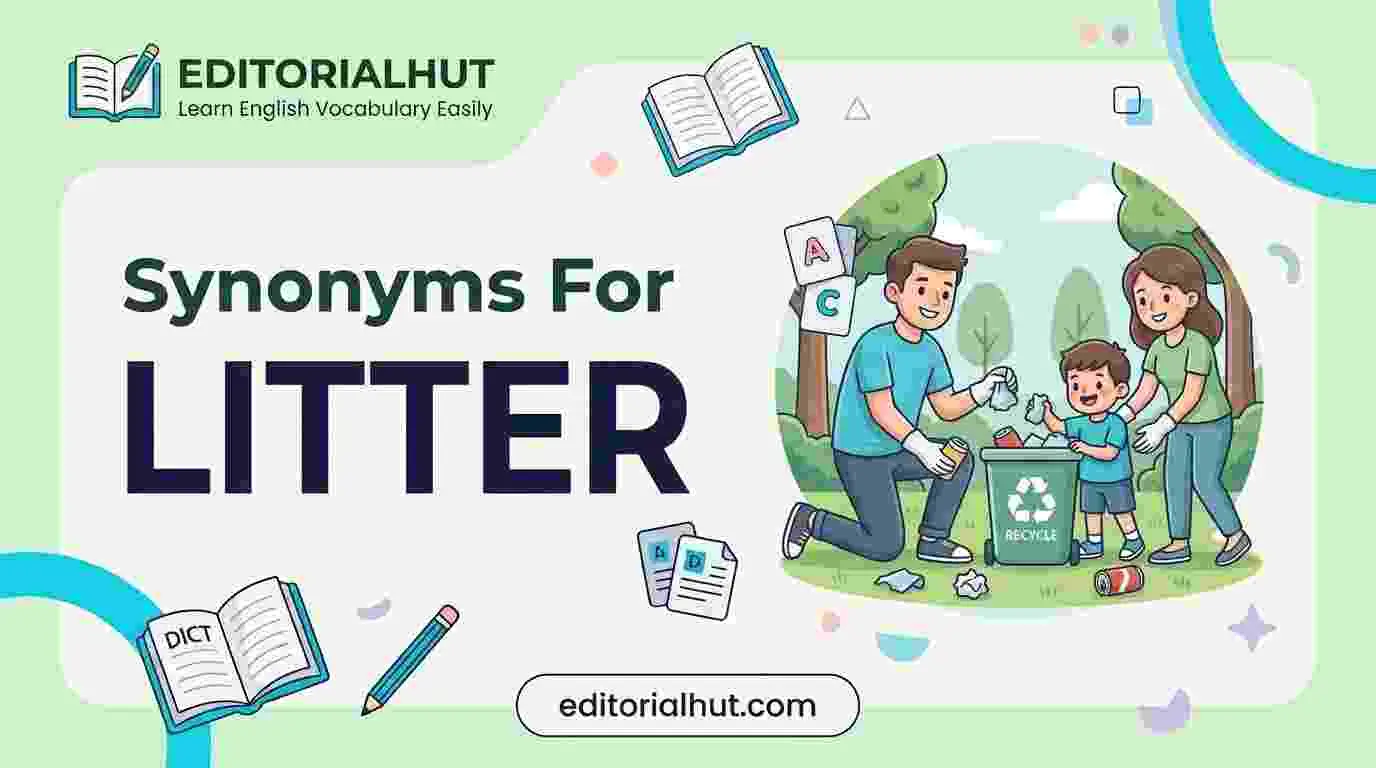
Have you ever walked past a park and seen trash on the ground? You might call it litter. But did you know there are many other words for litter too?
you’re writing a school essay. Maybe you’re a blogger who wants fresh words. Maybe you just want to sound less repetitive. Whatever the reason, knowing synonyms for litter helps you write better.
Litter means trash or garbage left in the wrong place. It also means to scatter things messily. For example: “Someone left litter on the beach.”
Learning synonyms for litter helps students write stronger essays. It helps English learners speak more naturally. It helps bloggers and content writers avoid repeating the same word. And it helps everyday English users describe messes clearly and simply.
What Does Litter Mean?
Litter has a simple meaning. It means trash, garbage, or waste that is scattered in a place where it shouldn’t be.
- Simple meaning: Small pieces of trash left around, or the act of leaving trash somewhere.
- Part of speech: Noun and verb.
- Example sentence: “Please don’t litter in the park.”
Important note: Litter also has two other meanings.
- As a noun, it can mean a group of baby animals born at the same time (like “a litter of puppies”).
- As a noun, it can mean the material used for a pet’s bathroom (like “cat litter”).
This article focuses on the most common meaning of litter: trash and mess, both as a noun and as a verb (to scatter trash).
Synonyms for Litter
Trash
Meaning: Trash means waste material, especially things that are thrown away.
Examples: Someone dropped trash on the sidewalk. The trash can was overflowing by noon.
Usage Note: Trash is common in everyday American English. (Perfect Synonym)
Garbage
Meaning: Garbage means waste or things people throw away, often food or household waste.
Examples: The garbage truck comes every Monday. There was garbage all over the street after the storm.
Usage Note: Garbage is used more for household waste in American English. (Perfect Synonym)
Rubbish
Meaning: Rubbish means waste material or trash that is no longer wanted.
Examples: She threw the rubbish into the bin. The park was full of rubbish after the festival.
Usage Note: Rubbish is more common in British English than American English. (Perfect Synonym)
Waste
Meaning: Waste means unwanted material left over after use.
Examples: Food waste attracts flies quickly. The factory dumped waste near the river.
Usage Note: Waste is often used in formal or environmental contexts. (Near-Synonym)
Refuse
Meaning: Refuse means garbage or things that have been thrown away.
Examples: The city collects refuse twice a week. Refuse collection was delayed due to the holiday.
Usage Note: Refuse sounds formal and is common in official or government writing. (Perfect Synonym)
Junk
Meaning: Junk means old or useless items that have little value.
Examples: The garage was full of junk. He sold his junk at a yard sale.
Usage Note: Junk usually means unwanted objects, not just trash on the ground. (Near-Synonym)
Debris
Meaning: Debris means scattered pieces of broken or destroyed material.
Examples: Debris covered the road after the storm. Workers cleared the debris from the site.
Usage Note: Debris often describes wreckage, not everyday trash. (Near-Synonym)
Detritus
Meaning: Detritus means waste material or fragments left behind.
Examples: The beach was covered in detritus after the flood. Detritus from the party littered the yard.
Usage Note: Detritus is a formal word, common in writing and science. (Near-Synonym)
Rubble
Meaning: Rubble means broken pieces of stone, brick, or building material.
Examples: The old building collapsed into rubble. Rescue workers searched through the rubble.
Usage Note: Rubble refers to broken construction material, not general trash. (Context-Specific)
Scraps
Meaning: Scraps means small leftover pieces, often food or paper.
Examples: Birds pecked at the food scraps. Paper scraps were scattered across the desk.
Usage Note: Scraps works best for small leftover bits, not large trash piles. (Context-Specific)
Dross
Meaning: Dross means worthless or waste material.
Examples: The old machine produced a lot of dross. He called the extra items dross and threw them out.
Usage Note: Dross is old-fashioned and used mostly in literary writing. (Context-Specific)
Wastepaper
Meaning: Wastepaper means paper that has been thrown away.
Examples: The wastepaper basket was full of old drafts. She recycled the wastepaper from her desk.
Usage Note: Wastepaper is specific to paper trash only. (Context-Specific)
Discards
Meaning: Discards means things that have been thrown away because they are no longer wanted.
Examples: The tailor’s discards filled a large bin. Discards from the factory were sent to recycling.
Usage Note: Discards works well for items removed from use, not general street trash. (Near-Synonym)
Castoffs
Meaning: Castoffs means things, often clothes, that have been thrown away or given up.
Examples: The thrift shop sold clothing castoffs. He wore his older brother’s castoffs.
Usage Note: Castoffs usually refers to unwanted clothing or personal items. (Context-Specific)
Flotsam
Meaning: Flotsam means floating debris or wreckage, often found in water.
Examples: Flotsam washed up on the shore after the storm. The beach was littered with flotsam and seaweed.
Usage Note: Flotsam is used mainly for debris found on water or beaches. (Context-Specific)
Strew
Meaning: Strew means to scatter things loosely over a surface.
Examples: Leaves were strewn across the yard. She strewed flower petals along the aisle.
Usage Note: Strew is the closest verb match to littering something. (Perfect Synonym)
Scatter
Meaning: Scatter means to throw or spread things in different directions.
Examples: The wind scattered papers across the street. Kids scattered toys all over the living room.
Usage Note: Scatter works well for describing how litter spreads. (Near-Synonym)
Clutter
Meaning: Clutter means a messy collection of things lying around untidily.
Examples: Clutter filled every corner of the room. Old boxes cluttered the hallway.
Usage Note: Clutter usually describes indoor mess, not outdoor trash. (Related Term)
Mess Up
Meaning: Mess up means to make a place untidy or disorganized.
Examples: The kids messed up the playroom in minutes. Don’t mess up the kitchen after cooking.
Usage Note: Mess up is casual and works well in informal conversation. (Near-Synonym)
Dump
Meaning: Dump means to throw something away carelessly, often in a large amount.
Examples: Someone dumped old furniture by the road. Factories should not dump waste into rivers.
Usage Note: Dump often implies a larger, careless act than simple littering. (Near-Synonym)
Toss
Meaning: Toss means to throw something away in a light or careless way.
Examples: He tossed the wrapper out the car window. She tossed her gum on the ground.
Usage Note: Toss is casual and common in spoken English. (Context-Specific)
Fling
Meaning: Fling means to throw something quickly and carelessly.
Examples: He flung the cup out of the window. The bottle was flung onto the grass.
Usage Note: Fling suggests a fast, careless throw, often used in the littering sense. (Context-Specific)
Sprinkle
Meaning: Sprinkle means to scatter small amounts of something lightly.
Examples: Confetti was sprinkled across the floor. Leaves sprinkled the path after the wind blew.
Usage Note: Sprinkle fits light, small-scale scattering, not heavy littering. (Context-Specific)
Spread
Meaning: Spread means to cover a wide area with something.
Examples: Trash spread across the entire parking lot. The mess spread from the kitchen to the hallway.
Usage Note: Spread describes how litter covers a wide area. (Related Term)
Untidiness
Meaning: Untidiness means the state of being messy or disorganized.
Examples: The untidiness of the room surprised her. Untidiness in public spaces bothers many people.
Usage Note: Untidiness describes a general condition, not specific trash items. (Related Term)
Mess
Meaning: Mess means an untidy or dirty state of a place.
Examples: The party left the backyard in a mess. Clean up this mess before dinner.
Usage Note: Mess is a general, everyday word for disorder. (Related Term)
Odds and Ends
Meaning: Odds and ends means small, miscellaneous leftover items.
Examples: The drawer was full of odds and ends. She swept up the odds and ends from the workshop floor.
Usage Note: Odds and ends fits small leftover items, not street trash. (Related Term)
Leavings
Meaning: Leavings means things left behind, often waste or scraps.
Examples: The leaves from dinner went into the compost. Animal leaves were scattered near the barn.
Usage Note: Leavings are old-fashioned and rarely used in modern speech. (Related Term)
Sweepings
Meaning: Sweepings means dust, dirt, or small trash swept up from a floor.
Examples: The sweepings were collected in a dustpan. Street sweepings piled up along the curb.
Usage Note: Sweepings specifically refers to swept-up dirt or small debris. (Context-Specific)
Disorder
Meaning: Disorder means a lack of order or a confused, messy state.
Examples: The office was in complete disorder after the move. Papers lay in disorder across the desk.
Usage Note: Disorder is broad and often used for messy situations beyond just trash. (Related Term)
Want to see about synonyms for letter
Synonyms for Litter by Context
Formal Writing
Use refuse, waste, or debris. These words sound professional and are common in reports, government notices, and academic papers. Example: “The city council discussed refuse collection schedules.”
Informal Conversations
Use trash, junk, or mess. These feel natural and relaxed in everyday talk. Example: “Can you throw that trash away?”
Academic Writing
Use debris, detritus, or waste. These words sound precise and objective. Example: “The detritus collected on the ocean floor over decades.”
Business English
Use waste or refuse when discussing operations, sustainability, or logistics. Example: “The company reduced waste by 20 percent this year.”
Everyday English
Use trash, garbage, or mess. These are simple and widely understood. Example: “There’s so much garbage on this street.”
Creative Writing
Use flotsam, dross, or leavings for a poetic or descriptive tone. Example: “Flotsam drifted along the quiet shore.”
Best Synonyms for Litter
| Synonym | Simple Meaning | Best Used In |
| Trash | Everyday word for garbage | Informal, everyday English |
| Garbage | Household waste | Everyday, American English |
| Rubbish | Waste material | British English, informal |
| Refuse | Formal word for garbage | Formal, official writing |
| Waste | Unwanted leftover material | Business, academic writing |
| Debris | Scattered broken material | Academic, news writing |
| Junk | Useless old items | Informal, everyday speech |
| Strew | To scatter loosely | Descriptive, creative writing |
| Scatter | To spread things around | General, descriptive use |
| Clutter | Messy indoor pile of items | Everyday, home-related contexts |
Example Sentences Using Litter
- The beach cleanup crew collected bags of litter.
- It’s illegal to litter in most national parks.
- The teacher asked students not to litter around the school.
- Cigarette butts are a common type of litter.
- Volunteers picked up litter along the highway.
- The wind blew litter across the empty lot.
- Fines for littering can be quite expensive.
- Litter along the riverbank harms local wildlife.
- The city launched a campaign to reduce litter.
- She reminded her kids never to litter at the park.
Common Mistakes When Using Litter
Mistake: Using “litter” when talking about big broken objects like furniture. Correct Usage: Use “debris” or “rubble” instead of “litter” for large broken items.
Mistake: Confusing “litter” (trash) with “litter” (baby animals) without context. Correct Usage: Add context, such as “a litter of kittens,” to avoid confusion.
Mistake: Using “garbage” and “litter” as exact matches in all situations. Correct Usage: Use “garbage” for household waste and “litter” for trash scattered outdoors.
Mistake: Treating “clutter” as the same as “litter.” Correct Usage: Use “clutter” for messy indoor items, not outdoor trash.
Mistake: Overusing “rubbish” in American English writing. Correct Usage: Use “trash” or “garbage” instead of “rubbish” for American readers.
How to Choose the Right Synonym for Litter
- Think about meaning. Choose “debris” for broken materials, “trash” for general garbage.
- Match the context. Use “refuse” in formal writing and “trash” in casual talk.
- Consider tone. Pick “flotsam” or “dross” for a poetic or descriptive tone.
- Know your audience. Use simple words like “trash” for young learners.
- Check formality. Save “waste” and “refuse” for reports and official writing.
- Watch sentence structure. Some synonyms work only as nouns, others only as verbs.
- Remember regional English. Use “rubbish” for British English and “trash” or “garbage” for American English.
Frequently Asked Questions About Litter
What is another word for litter?
Common alternatives include trash, garbage, rubbish, waste, and debris. Each word fits slightly different situations, so choose based on your context and audience.
What is the best synonym for litter?
“Trash” is one of the most natural and widely used synonyms in everyday American English. It works well in casual writing, conversation, and simple explanations.
What are common synonyms for litter?
Trash, garbage, rubbish, waste, junk, and debris are among the most common synonyms. They are all understood easily by most English speakers.
What is a formal synonym for litter?
“Refuse” is a formal synonym often used in official documents, reports, and government communication about waste management.
What is an easy synonym for litter?
“Trash” is simple, short, and easy for beginners and young learners to understand and use correctly.
Can I use “garbage” instead of “litter”?
Yes, but “garbage” usually refers to household waste, while “litter” often describes trash scattered outdoors in public spaces.
What is the difference between litter and debris?
“Litter” usually means small pieces of trash, while “debris” often refers to larger broken pieces from damage or destruction.
Is “clutter” the same as “litter”?
Not exactly. “Clutter” describes messy items indoors, while “litter” typically refers to trash found outside in public areas.
Conclusion
Learning synonyms for litter makes your writing and speaking richer. It helps you avoid repeating the same word again and again. Strong vocabulary improves your essays, blog posts, emails, and daily conversations. Try using words like trash, debris, or refuse the next time you write. Practice them in school assignments, work emails, or casual chats with friends. The more you use these synonyms for litter, the more natural they will feel. Keep practicing, and your English will keep growing stronger every day.

Shahid Imran is an English language and vocabulary specialist at EditorialHut.com, focusing on synonyms, word meanings, alternative words, and practical example sentences. He helps readers discover better words, expand their vocabulary, and communicate more clearly and confidently.