







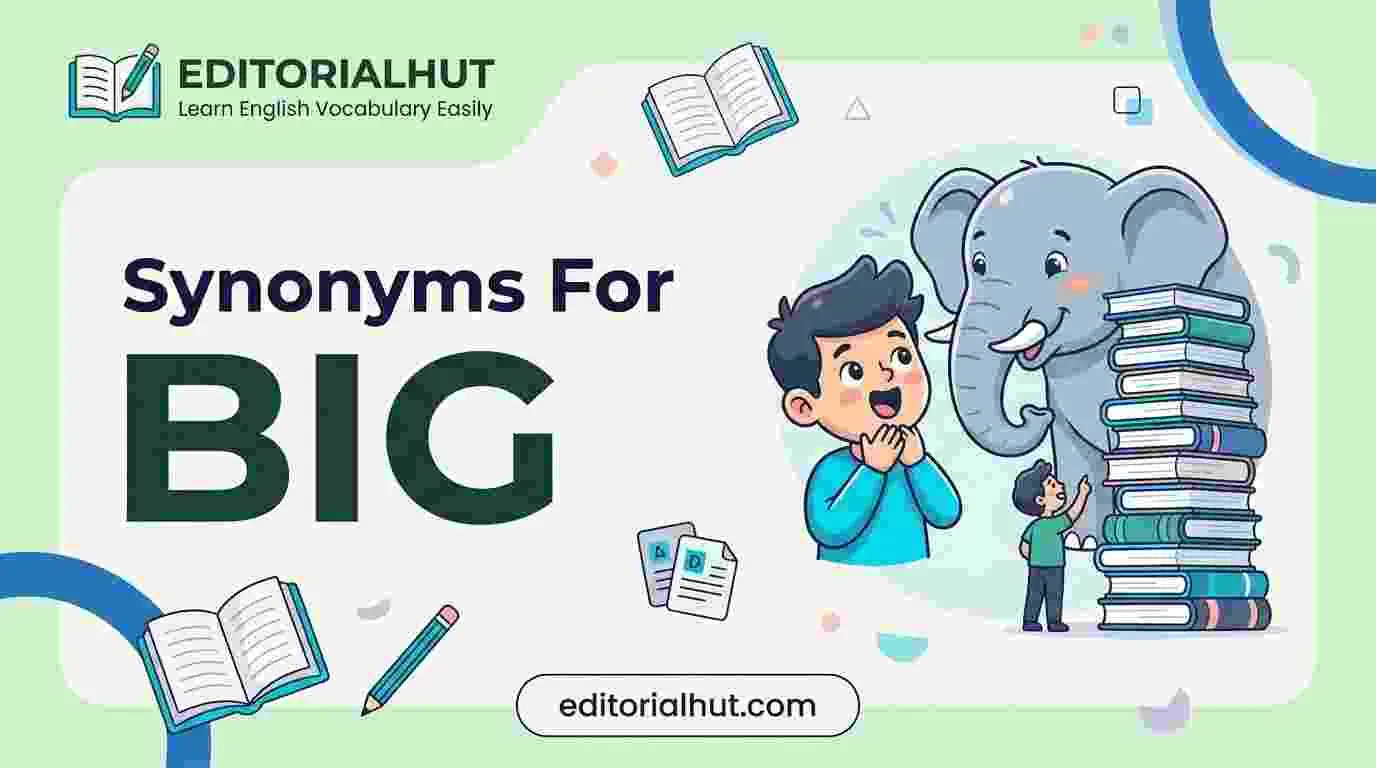
Have you ever written the word “big” three times in one paragraph? Most writers have. It’s a handy word, but it gets boring fast. That’s where synonyms for big come in. They let you say the same idea in a fresh way.
The word “big” simply means large in size, amount, or importance. Learning synonyms for big helps you avoid repeating yourself and makes your writing sound more natural. It also helps you express exact shades of meaning a “huge” mistake feels different from a “significant” one.
Students use synonyms to improve essays. Bloggers use them to keep readers interested. Content writers use them to sound less robotic. ESL learners use them to build stronger vocabulary. And everyday English speakers use them just to sound more natural in conversation.
What Are the Best Synonyms for Big?
The best synonyms for big include large, huge, enormous, massive, giant, gigantic, immense, colossal, vast, and substantial. Each word shares the core idea of great size, but some are stronger, more formal, or better suited to specific situations, like describing objects, spaces, or importance.
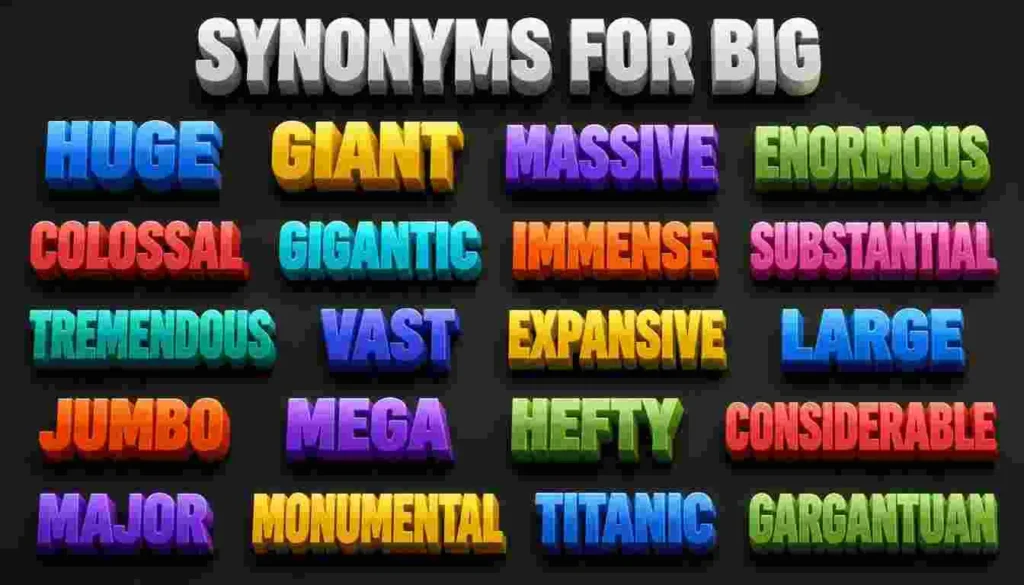
Big Synonyms at a Glance
| Synonym | Simple Meaning | Best Used For |
| Large | Bigger than average | General, everyday use |
| Huge | Very big | Informal speech and writing |
| Enormous | Extremely big | Emphasizing great size |
| Massive | Very big and heavy or solid | Objects, buildings, problems |
| Giant | Unusually large | Casual and descriptive writing |
| Gigantic | Extremely large | Strong emphasis, informal |
| Immense | Very great in size or degree | Formal or literary writing |
| Colossal | Extraordinarily large | Dramatic emphasis |
| Vast | Very large in area | Spaces, land, amounts |
| Tremendous | Very great in size or amount | Formal and informal use |
| Substantial | Considerable in size or amount | Business and academic writing |
| Sizable | Fairly large | Neutral, everyday use |
| Hefty | Heavy and large | Casual, physical objects |
| Mammoth | Extremely large | Projects, tasks, structures |
| Spacious | Large and roomy | Rooms, homes, areas |
1. Large
Meaning: Bigger than the usual or average size.
Examples: She bought a large suitcase for her trip to Italy. The company moved into a large office downtown.
2. Huge
Meaning: Very big in size or amount.
Examples: There was a huge crowd at the concert last night. He made a huge mistake on the final exam.
3. Enormous
Meaning: Extremely large in size, amount, or degree.
Examples: The old oak tree in the yard is enormous. They faced an enormous challenge after the storm.
4. Massive
Meaning: Very large, heavy, or solid in size.
Examples: A massive truck blocked the entire road. The company reported a massive drop in sales.
5. Giant
Meaning: Much bigger than what is normal or expected.
Examples: A giant billboard stood at the edge of the highway. The bakery sells a giant cookie for special occasions.
6. Gigantic
Meaning: Extremely large, often used for emphasis.
Examples: The kids built a gigantic sandcastle at the beach. A gigantic wave crashed over the boat.
7. Immense
Meaning: Very great in size, scale, or degree.
Examples: The desert stretched out with immense, empty space. She felt immense relief after the test results came back.
8. Colossal
Meaning: Extraordinarily large, often used to describe something impressive or dramatic.
Examples: The ancient statue was colossal, towering over visitors. It turned out to be a colossal waste of time.
9. Vast
Meaning: Covering a very large area or amount.
Examples: The ranch covers a vast stretch of open land. There is a vast difference between the two plans.
10. Tremendous
Meaning: Very great in size, amount, or intensity.
Examples: The charity raised a tremendous amount of money this year. He showed tremendous courage during the emergency.
11. Substantial
Meaning: Large enough to be important or significant.
Examples: The company made a substantial investment in new equipment. She noticed a substantial improvement in her grades.
12. Sizable
Meaning: Fairly large, though not always extreme.
Examples: They own a sizable piece of property near the lake. A sizable portion of the budget goes toward marketing.
13. Hefty
Meaning: Large and heavy, often used casually.
Examples: He paid a hefty fine for parking illegally. The store sells a hefty bag of dog food for less.
14. Bulky
Meaning: Large in a way that is awkward to carry or store.
Examples: The furniture was too bulky to fit in the car. Her winter coat feels bulky but keeps her warm.
15. Mammoth
Meaning: Extremely large, especially for a task or project.
Examples: Rebuilding the bridge was a mammoth undertaking. The city launched a mammoth cleanup effort after the flood.
16. Monumental
Meaning: Extremely large or important, often historic in scale.
Examples: Passing the new law was a monumental achievement. The museum houses a monumental sculpture from the 1800s.
17. Whopping
Meaning: Very large, used informally for emphasis.
Examples: She won a whopping ten thousand dollars in the contest. The house sold for a whopping price last month.
18. Grand
Meaning: Large and impressive, often referring to buildings or events.
Examples: The hotel lobby has a grand staircase in the center. They planned a grand celebration for the anniversary.
19. Extensive
Meaning: Large in range, area, or amount of detail.
Examples: The report includes extensive research on climate change. He has an extensive collection of vintage records.
20. Considerable
Meaning: Large enough to be worth noticing or thinking about.
Examples: The project required a considerable amount of planning. There was considerable interest in the new product launch.
21. Spacious
Meaning: Large and open, usually describing rooms or areas.
Examples: Their new apartment has a spacious kitchen. The park offers a spacious area for kids to play.
22. Broad
Meaning: Large in width or range, sometimes used figuratively.
Examples: The river has a broad, calm section near the bridge. She has a broad knowledge of world history.
23. Ample
Meaning: More than enough in size or amount.
Examples: There is ample parking behind the building. He had ample time to finish the assignment.
24. Towering
Meaning: Extremely tall and large, often impressive or intimidating.
Examples: A towering skyscraper dominated the city skyline. The team faced a towering opponent in the finals.
25. Jumbo
Meaning: Very large, often used for products or informal descriptions.
Examples: They ordered a jumbo pizza for the party. The airport handles several jumbo jets each day.
26. Hulking
Meaning: Very large and heavy, often describing a person or object with a slightly clumsy or imposing look.
Examples: A hulking figure appeared at the end of the hallway. The old hulking machine sat unused in the warehouse.
27. King-Size
Meaning: Larger than the standard or usual size, often used for products.
Examples: They bought a king-size bed for the new bedroom. The store sells a king-size candy bar at checkout.
28. Oversized
Meaning: Bigger than normal or necessary.
Examples: He wore an oversized sweater on the cold morning. The oversized suitcase didn’t fit in the overhead bin.
29. Expansive
Meaning: Covering a wide area, often used for views or spaces.
Examples: The hotel room offered an expansive view of the ocean. She gave an expansive answer that covered several topics.
30. Mighty
Meaning: Very large and powerful, often used in a strong or dramatic way.
Examples: The mighty river carved through the canyon over centuries. It was a mighty effort to finish the marathon.
If you want to see synonyms for great
How to Choose the Right Synonym for Big
Synonyms rarely mean exactly the same thing. Some are stronger, some are softer, and some fit only certain situations.
- Formal vs. informal: “Substantial” fits a business report, while “huge” fits a casual chat.
- Positive vs. negative: “Grand” often sounds impressive, while “bulky” can sound like a problem.
- Strong vs. weak: “Colossal” is far stronger than “sizable.”
- Academic writing often calls for words like “substantial” or “considerable.”
- Business writing favors “significant” or “extensive.”
- Casual conversation works well with “huge” or “giant.”
- Creative writing can use vivid words like “towering” or “mighty.”
- Social media content often uses short, punchy words like “jumbo” or “whopping.”
Choosing the right word helps your writing match the tone you want, whether that’s professional, playful, or dramatic.
Formal and Informal Synonyms for Big
| Formal Synonym | Informal Synonym | Example Context |
| Substantial | Huge | Business report vs. casual chat |
| Considerable | Giant | Academic essay vs. everyday speech |
| Extensive | Jumbo | Research paper vs. food menu |
| Immense | Whopping | Formal speech vs. social media post |
| Monumental | Massive | News article vs. text message |
Best Synonyms for Different Contexts
Academic Writing Substantial, considerable, extensive, significant, and vast work well because they sound precise and professional.
Blog Writing Huge, giant, massive, sizable, and tremendous keep blog posts easy to read while staying engaging.
Business Writing Substantial, considerable, sizable, extensive, and significant fit reports, emails, and presentations.
Everyday Conversation Huge, giant, big, jumbo, and whopping sound natural when talking with friends or family.
Creative Writing Towering, mighty, colossal, immense, and vast add color and imagery to stories and poems.
Common Mistakes When Using Synonyms
- Choosing the wrong meaning. “Bulky” suggests awkwardness, not just size, so it doesn’t always fit.
- Using a formal word in casual speech. Saying “immense” in a text message can sound stiff.
- Replacing a word without checking context. “Broad” works for width, but not for height or volume.
- Changing the tone by accident. “Colossal” can sound dramatic when a simpler word would work better.
- Repeating synonyms too often. Using “huge” in every sentence still feels repetitive, even if it isn’t “big.”
Synonyms vs. Related Words
- True synonyms share almost the same meaning, like “large” and “big.”
- Near-synonyms are close but not identical, like “hefty,” which adds a sense of weight.
- Related words connect to the topic but mean something different, like “size” or “scale.”
- Contextual alternatives only work in specific situations, like “king-size,” which mainly describes products.
Understanding these differences helps you pick words that truly fit your sentence, not just words that appear on a synonym list.
How to Use Synonyms in Your Writing
Synonyms can make almost any type of writing stronger:
- Essays sound more polished with varied vocabulary.
- Blog posts stay interesting when words don’t repeat.
- Emails feel more professional with precise word choices.
- Website content reads more naturally to visitors.
- Social media posts grab attention with punchy words.
- Stories become more vivid with descriptive language.
- School assignments show stronger vocabulary skills.
Frequently Asked Questions About Big
What is another word for big?
Common alternatives include large, huge, enormous, and massive. Each one works well in slightly different situations.
What is the best synonym for big?
There is no single best choice. “Large” works for general use, while “huge” fits informal speech, and “substantial” suits formal writing.
Which synonym is best for formal writing?
“Substantial,” “considerable,” and “extensive” all sound professional and precise in formal writing.
Which synonym is best for everyday conversation?
“Huge,” “giant,” and “jumbo” sound natural and relaxed in daily conversation.
Can I use these synonyms in academic writing?
Yes, but choose carefully. Words like “substantial,” “considerable,” and “significant” fit academic tone better than casual words like “jumbo.”
Are all synonyms exactly the same?
No. Most synonyms share a similar meaning but differ in tone, strength, or context, so they aren’t always interchangeable.
How can I learn synonyms easily?
Read often, keep a small vocabulary notebook, and practice using new words in real sentences instead of just memorizing lists.
How can synonyms improve my writing?
Synonyms add variety, prevent repetition, and help you express precise shades of meaning, making your writing clearer and more engaging.
Conclusion
Learning synonyms for big can improve your writing, blogging, speaking, and everyday communication. Instead of repeating the same word, you can choose one that fits the tone and meaning you want.
Try using a few of these words in your next email, essay, or blog post. The more you practice, the more naturally they will come to you. Small changes like this can make a big difference in how clear and interesting your writing sounds.

Shahid Imran is an English language and vocabulary specialist at EditorialHut.com, focusing on synonyms, word meanings, alternative words, and practical example sentences. He helps readers discover better words, expand their vocabulary, and communicate more clearly and confidently.