










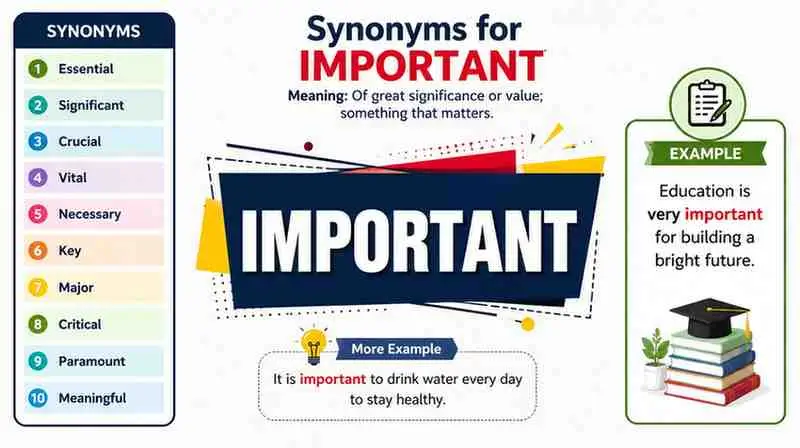
“Important” is one of the most overused words in English. It shows up in emails, essays, presentations, and everyday conversation so often that it can start to feel flat or vague. The good news is that English offers many strong alternatives, each with its own shade of meaning , some suggest urgency, others suggest value, and others fit better in formal or casual settings. This article breaks down the most useful synonyms for important, explains how they differ, and shows you how to pick the right one for your writing.
What Are the Best Synonyms for Important?
The best synonyms for important include essential, crucial, significant, vital, key, critical, major, meaningful, valuable, and noteworthy. While these words all relate to something mattering a great deal, they aren’t always interchangeable. Some, like crucial and vital, imply that something is necessary for success or survival. Others, like noteworthy or significant, simply mean something deserves attention. Choosing the right one depends on how strong or urgent you want your sentence to sound.
Synonyms for Important at a Glance
| Synonym | Meaning | Best Context |
| Essential | Absolutely necessary | Requirements, needs |
| Crucial | Necessary for success | Decisions, turning points |
| Vital | Necessary for life or function | Health, survival, core needs |
| Significant | Notable or meaningful | Data, events, changes |
| Critical | Extremely serious or urgent | Emergencies, risks |
| Key | Central or main | Ideas, people, factors |
| Major | Large in size or effect | Events, issues |
| Meaningful | Full of purpose or value | Relationships, experiences |
| Valuable | Worth a great deal | Advice, resources, time |
| Noteworthy | Deserving attention | Achievements, findings |
Detailed Synonyms
Essential
Meaning: Absolutely necessary; something a situation cannot do without.
Best used when: You want to stress that something is a basic requirement.
Example: Clean water is essential for survival.
Usage note: Slightly stronger than “important” , implies the thing cannot be left out.
Crucial
Meaning: So important that it determines the outcome of something.
Best used when: Describing a decision, moment, or factor that will shape what happens next. Example:
The next ten minutes of the meeting are crucial to closing the deal.
Usage note: Often used for turning points or high-stakes moments.
Vital
Meaning: Necessary for life, health, or the basic functioning of something.
Best used when: Talking about health, survival, or core operational needs.
Example: Regular maintenance is vital to keeping the engine running safely.
Usage note: Strong word; can feel dramatic if overused in low-stakes contexts.
Significant
Meaning: Large enough or meaningful enough to be worth noticing.
Best used when: Discussing data, research findings, or noticeable change.
Example: The study found a significant improvement in patient recovery times.
Usage note: Common in academic and analytical writing; more neutral in tone than “crucial.”
Critical
Meaning: Extremely important, often urgent or tied to risk.
Best used when: Describing emergencies, serious problems, or high-risk situations.
Example: Backing up the files before the update is critical.
Usage note: Carries a sense of urgency; stronger than “important” in most contexts.
Key
Meaning: Central, main, or most important among several factors.
Best used when: Highlighting one main idea, person, or element among many.
Example: Communication is the key factor in a healthy relationship.
Usage note: Common in everyday and business writing; less formal than “crucial” or “vital.”
Major
Best used when: Emphasizing size, scale, or impact rather than urgency.
Meaning: Large or significant in size, scale, or effect.
Example: Losing that client was a major setback for the company.
Usage note: Focuses on scale more than necessity; near-synonym rather than an exact match.
Meaningful
Meaning: Having real purpose, value, or emotional significance.
Best used when: Describing relationships, experiences, or actions that carry personal or emotional weight.
Example: She wanted to have a meaningful conversation with her father before he left.
Usage note: Emphasizes emotional or personal value rather than urgency; near-synonym.
Valuable
Meaning: Worth a great deal, whether in usefulness, money, or benefit.
Best used when: Describing advice, time, resources, or skills.
Example: Her feedback was valuable during the early stages of the project.
Usage note: Focuses on worth rather than necessity; near-synonym in most contexts.
Noteworthy
Meaning: Deserving attention or notice because of its quality or impact.
Best used when: Highlighting achievements, findings, or events worth mentioning
. Example: The team’s turnaround this season has been noteworthy.
Usage note: More neutral and observational; doesn’t imply urgency or necessity.
If you looking for synonyms for amazing
How to Choose the Right Synonym for Important
Synonyms for important are not always interchangeable. Choosing the wrong one can shift the tone, strength, or accuracy of a sentence. Consider these factors:
- Strength: Critical and vital suggest urgency or necessity, while noteworthy is much milder.
- Formality: Essential and significant fit formal or academic writing better than key or major, which feel more conversational.
- Context: Vital fits health and survival topics; significant fits data and research; key fits everyday explanations.
- Emotional weight: Meaningful suits personal or emotional topics, while critical suits technical or high-risk ones.
For example, saying “This meeting is vital” sounds far more urgent than “This meeting is noteworthy,” even though both technically mean the meeting matters.
Synonyms for Important by Context
For Academic Writing
Significant, essential, and critical work well because they sound precise and objective, which fits research and analysis.
For Business Writing
Key, critical, and valuable are common because they communicate priority clearly without sounding overly dramatic.
For Everyday Conversation
Important, big deal, and key feel natural and easy to understand in casual speech.
For Creative Writing
Vital and meaningful help convey emotional depth or high stakes in a story or narrative.
Formal and Informal Alternatives
| Word | Tone | Suitable Context |
| Essential | Formal | Reports, instructions |
| Significant | Formal | Academic, research writing |
| Crucial | Neutral | General writing, speeches |
| Key | Neutral | Business, everyday writing |
| Major | Neutral | News, general commentary |
| Big deal | Informal | Casual conversation |
Common Mistakes When Using Important Synonyms
- Using “vital” for minor matters. Saying a minor scheduling change is “vital” overstates its importance.
- Confusing “major” with “important.” Major refers to size or scale, not always necessity , a major event isn’t always essential.
- Overusing “critical” in casual writing. This can make everyday messages sound alarming or overly urgent.
- Treating all synonyms as equally strong. “Noteworthy” and “crucial” are not close substitutes, even though both relate to importance.
Synonyms vs. Related Words
Some words on this list are true synonyms of important , like essential and crucial , because they can usually replace “important” without changing the sentence’s core meaning. Others, like meaningful and valuable, are near-synonyms: they overlap in meaning but emphasize a different quality, such as emotional worth or usefulness rather than necessity. Recognizing this difference helps you choose words that keep your original meaning intact.
How to Use These Synonyms in Your Writing
Varying your word choice makes essays, emails, and reports easier to read and more precise. Instead of repeating “important” throughout a document, use essential when something is required, significant when discussing data or findings, and key when pointing to a main idea. This kind of precision helps readers, teachers, and colleagues understand exactly how much weight you’re placing on a point , and it keeps your writing from sounding repetitive.
Short Question Answer
What is another word for important?
Common alternatives include essential, crucial, significant, vital, and key.
What is the best synonym for important in formal writing?
Essential and significant are strong choices for formal or academic writing.
Which synonym sounds most natural in everyday conversation?
Key and importance itself both sound natural; big deal works well in casual speech.
Are all synonyms for important interchangeable?
No. Words like vital and critical imply urgency or necessity, while noteworthy simply means something deserves attention.
What is the difference between important and crucial?
Crucial implies that something will directly affect an outcome, while important is more general and doesn’t always suggest a turning point.
Is “key” a strong synonym for important?
Yes, but it usually points to one central factor rather than describing overall importance.
Conclusion
“Important” is a useful word, but English offers many precise alternatives that can sharpen your writing. Words like essential and vital stress necessity, crucial and critical highlight urgency, and significant and noteworthy point to something worth attention. The key is matching the word’s strength and tone to your context , formal, casual, emotional, or analytical. With a little practice, choosing the right synonym becomes second nature, and your writing will feel clearer and more confident as a result.

Shahid Imran is an English language and vocabulary specialist at EditorialHut.com, focusing on synonyms, word meanings, alternative words, and practical example sentences. He helps readers discover better words, expand their vocabulary, and communicate more clearly and confidently.