







Have you ever typed the word “excited” three times in the same email and felt a little embarrassed about it? You’re not alone. “Excited” is one of the most overused words in English, and it can make your writing feel flat after a while.
The good news is that English has dozens of synonyms for excited that can add color and energy to your sentences. Learning these words is not just for advanced learners. Students, bloggers, content writers, ESL learners, and everyday English speakers can all benefit from a bigger vocabulary.
In this article, you’ll find 30 clear synonyms for excited, each with a simple meaning and two example sentences. By the end, you’ll know exactly which word to use and when to use it.
What Are the Best Synonyms for Excited?
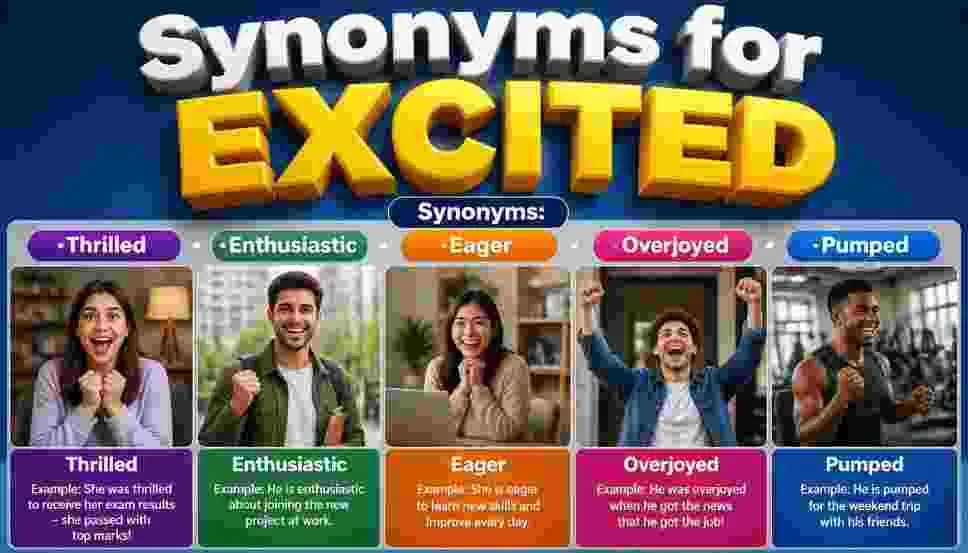
The best synonyms for excited include thrilled, eager, enthusiastic, elated, and pumped. These words describe a strong feeling of happy energy or anticipation. Some, like ecstatic and overjoyed, show very strong excitement, while others, like keen and animated, describe a lighter or more everyday kind of excited feeling.
Excited Synonyms at a Glance
| Synonym | Simple Meaning | Best Used For |
| Thrilled | Very happy and excited | Everyday speech, writing |
| Eager | Wanting something very much | School, work, plans |
| Enthusiastic | Full of energy and interest | Presentations, hobbies |
| Elated | Extremely happy and excited | Big achievements |
| Ecstatic | Overwhelmingly joyful | Major good news |
| Pumped | Full of excited energy | Sports, casual talk |
| Stoked | Very excited (informal) | Casual, youth culture |
| Exhilarated | Excited and full of energy after something intense | Adventure, thrill |
| Delighted | Very pleased and happy | Polite, formal contexts |
| Keen | Interested and eager | British English, mild excitement |
| Energized | Full of new energy and motivation | Work, fitness |
| Fired Up | Motivated and excited to act | Sports, motivation |
| Psyched | Mentally excited and ready | Casual, before events |
| Overjoyed | Extremely happy | Emotional good news |
| Buzzing | Full of excited energy | British informal speech |
1. Thrilled
Meaning: Feeling a strong burst of happy excitement about something.
Examples:
- She was thrilled when she got the acceptance letter from her dream school.
- We’re thrilled to announce our new product launch next week.
2. Eager
Meaning: Wanting to do or have something very much, often with visible enthusiasm.
Examples:
- The puppy was eager to go outside and play.
- He seemed eager to start his first day at the new job.
3. Enthusiastic
Meaning: Showing strong interest and excitement about an idea or activity.
Examples:
- The coach was enthusiastic about the team’s progress this season.
- She gave an enthusiastic speech that got everyone motivated.
4. Elated
Meaning: Feeling extremely happy and excited, usually after good news.
Examples:
- He was elated after passing his driving test on the first try.
- The whole family felt elated when the baby was born safely.
5. Ecstatic
Meaning: Feeling an overwhelming, almost uncontrollable sense of joy and excitement.
Examples:
- The fans were ecstatic when their team won the championship.
- She was ecstatic to hear that she got the promotion.
6. Pumped
Meaning: Feeling full of excited, active energy, often before an event.
Examples:
- The players were pumped before the big game started.
- I’m so pumped for the concert this weekend.
7. Stoked
Meaning: An informal way to say very excited, often used by younger speakers.
Examples:
- He’s stoked about his upcoming trip to Japan.
- We’re stoked to try the new restaurant downtown tonight.
8. Exhilarated
Meaning: Feeling very excited and full of energy, often after doing something thrilling or intense.
Examples:
- She felt exhilarated after finishing her first marathon.
- Riding the roller coaster left him exhilarated and breathless.
9. Delighted
Meaning: Feeling great pleasure and happiness, slightly more polite than “excited.”
Examples:
- We are delighted to welcome you to our team.
- She was delighted with the surprise birthday party.
10. Keen
Meaning: Showing eager interest or enthusiasm, often used in British English.
Examples:
- He’s keen to learn more about photography.
- I’m keen on trying that new bakery near the office.
11. Animated
Meaning: Full of lively energy and expression, often shown through voice or movement.
Examples:
- She became animated when she started talking about her travel plans.
- The children grew animated as the story reached its exciting part.
12. Energized
Meaning: Feeling refreshed and full of active energy, ready to do something.
Examples:
- The morning walk left her feeling energized for the day.
- The team felt energized after the motivational meeting.
13. Fired Up
Meaning: Feeling motivated, excited, and ready to take action.
Examples:
- The coach’s speech got the players fired up before the match.
- She’s fired up about starting her own small business.
14. Psyched
Meaning: Mentally excited and prepared for something, often used casually.
Examples:
- I’m psyched about the new season of my favorite show.
- He was psyched for his first day of college.
15. Jazzed
Meaning: An informal word meaning excited or enthusiastic about something.
Examples:
- She’s jazzed about redecorating her apartment this month.
- We got jazzed talking about our upcoming road trip.
16. Overjoyed
Meaning: Feeling an extremely high level of happiness and excitement.
Examples:
- The parents were overjoyed when their son returned home safely.
- She was overjoyed to see her old friend after so many years.
17. Exuberant
Meaning: Full of lively, energetic, and cheerful excitement.
Examples:
- The children were exuberant as they ran around the playground.
- His exuberant personality made the party feel more fun.
18. Buzzing
Meaning: Feeling excited energy, often used informally in British English.
Examples:
- The whole office was buzzing after the good sales report.
- She’s buzzing about her upcoming vacation to Italy.
19. Hyped
Meaning: Very excited, often about something upcoming, common in casual speech.
Examples:
- Fans are hyped for the new movie release next month.
- He’s hyped about his first concert experience.
20. Giddy
Meaning: Feeling light, happy, and a little overwhelmed with excitement.
Examples:
- She felt giddy with excitement on her wedding day.
- The kids were giddy waiting for the ice cream truck.
21. Jubilant
Meaning: Showing great happiness and triumphant excitement, often after success.
Examples:
- The crowd was jubilant after the team’s winning goal.
- She felt jubilant when her project finally succeeded.
22. Electrified
Meaning: Suddenly filled with intense excitement or energy, as if charged with electricity.
Examples:
- The stadium was electrified when the star player scored.
- Her surprising announcement electrified the entire meeting room.
23. Invigorated
Meaning: Feeling refreshed, energized, and excited, often after rest or activity.
Examples:
- A cold shower left him feeling invigorated in the morning.
- She felt invigorated after a short walk in the fresh air.
24. Zealous
Meaning: Showing great energy and enthusiasm for a cause or activity, often intense.
Examples:
- He is a zealous supporter of local environmental projects.
- The new employee was zealous about improving the team’s workflow.
25. Avid
Meaning: Having a strong, eager interest in something, often used with hobbies.
Examples:
- She’s an avid reader who finishes a book every week.
- He’s an avid fan of classic rock music.
26. Wired
Meaning: Feeling restless and full of nervous or excited energy, often informal.
Examples:
- He felt wired after drinking too much coffee before the meeting.
- The kids were wired with excitement the night before the trip.
27. Amped
Meaning: An informal term meaning very excited or energized, often before an event.
Examples:
- The band was amped before walking on stage.
- She’s amped about starting her new fitness class.
28. Inspired
Meaning: Feeling excited and motivated by an idea, person, or experience.
Examples:
- The lecture left the students feeling inspired to study harder.
- She felt inspired after watching the documentary about ocean life.
29. Passionate
Meaning: Feeling strong enthusiasm and excitement about something you care about deeply.
Examples:
- He’s passionate about cooking and tries new recipes every week.
- She spoke in a passionate way about protecting local wildlife.
30. Antsy
Meaning: Feeling restless and unable to stay still because of eager excitement, a near-synonym rather than a perfect match.
Examples:
- The kids got antsy waiting for the movie to start.
- He was antsy all morning before his flight to Paris.
How to Choose the Right Synonym for Excited
Synonyms rarely mean exactly the same thing. Each word carries its own tone, strength, and context.
- Formal vs. informal: “Delighted” fits a business email, while “stoked” fits a text to a friend.
- Positive vs. negative: Most synonyms for excited are positive, but words like “wired” or “antsy” can hint at nervous energy.
- Strong vs. weak: “Keen” is mild interest, while “ecstatic” shows overwhelming joy.
- Academic writing: Choose calmer, precise words like “enthusiastic” or “invigorated.”
- Business writing: Use professional words like “delighted” or “energized.”
- Casual conversation: Words like “pumped,” “stoked,” and “hyped” feel natural.
- Creative writing: Try vivid words like “electrified” or “exuberant” for stronger imagery.
- Social media content: Short, punchy words like “psyched” or “amped” work well.
Choosing the right synonym matters because the wrong tone can confuse your reader. Saying you’re “ecstatic” about a minor work update, for example, can sound insincere.
Formal and Informal Synonyms for Excited
| Formal Synonym | Informal Synonym | Example Context |
| Delighted | Stoked | Business email vs. text message |
| Enthusiastic | Pumped | Presentation vs. locker room talk |
| Elated | Jazzed | News article vs. casual chat |
| Invigorated | Wired | Report vs. everyday conversation |
| Eager | Amped | Cover letter vs. social media post |
Best Synonyms for Different Contexts
Academic Writing Enthusiastic, keen, invigorated, eager, avid
Blog Writing Thrilled, pumped, hyped, exuberant, inspired
Business Writing Delighted, energized, enthusiastic, eager, elated
Everyday Conversation Stoked, psyched, pumped, giddy, wired
Creative Writing Electrified, exhilarated, jubilant, ecstatic, exuberant
Common Mistakes When Using Synonyms
- Choosing a word with the wrong meaning. “Antsy” suggests restlessness, not pure happiness, so it doesn’t always fit joyful excitement.
- Using a formal word in casual speech. Saying “I am delighted” to a close friend can sound stiff or sarcastic.
- Replacing a word without checking context. “Wired” can suggest nervous energy, which may not match your intended tone.
- Changing the tone accidentally. Swapping “eager” for “zealous” can make a simple request sound overly intense.
- Repeating synonyms too much in SEO content. Using the same alternative word in every sentence looks unnatural to both readers and search engines.
Synonyms vs. Related Words
- True synonyms share almost the same meaning, like “thrilled” and “elated.”
- Near-synonyms are close but not identical, like “antsy,” which adds a sense of restlessness.
- Related words connect to the same topic without meaning the same thing, like “excitement” (a noun) or “exciting” (describing something else, not a feeling).
- Contextual alternatives only work in specific situations, like using “buzzing” mainly in casual British English.
Understanding these differences helps you avoid using a word that technically relates to “excited” but doesn’t actually fit your sentence.
How to Use Synonyms in Your Writing
Synonyms can make your writing more interesting in many places:
- Essays: Avoid repeating “excited” in every paragraph by mixing in “eager” or “enthusiastic.”
- Blog posts: Use lively words like “hyped” or “thrilled” to match a friendly tone.
- Emails: Choose polished words like “delighted” for professional messages.
- Website content: Vary your word choice to keep visitors engaged.
- Social media posts: Short, energetic words like “stoked” or “pumped” grab attention.
- Stories: Use descriptive words like “electrified” or “exhilarated” to build emotion.
- School assignments: Show a wider vocabulary with words like “invigorated” or “avid.”
The goal is always clarity first. Synonyms should make your writing easier to understand and more enjoyable to read, not confusing.
Frequently Asked Questions About Excited
What is another word for excited?
Common alternatives include thrilled, eager, enthusiastic, and pumped. Each word has a slightly different level of intensity and tone.
What is the best synonym for excited?
There isn’t one single best word. “Thrilled” works well in general use, while “delighted” suits formal writing and “stoked” fits casual speech.
Which synonym is best for formal writing?
“Delighted,” “enthusiastic,” and “invigorated” work well in professional or academic writing because they sound polished and clear.
Which synonym is best for everyday conversation?
“Pumped,” “stoked,” and “psyched” are common, natural choices for casual, everyday conversations with friends or family.
Can I use these synonyms in academic writing?
Yes, but choose calmer, more precise words like “enthusiastic,” “keen,” or “eager” instead of very casual terms like “stoked” or “amped.”
Are all synonyms exactly the same?
No. Most synonyms share a similar meaning but differ in strength, tone, or formality. Some, like “antsy,” are near-synonyms rather than exact matches.
How can I learn synonyms easily?
Read a variety of books and articles, keep a small vocabulary notebook, and practice using new words in your own sentences every day.
How can synonyms improve my writing?
Synonyms add variety, prevent repetition, and help you express different shades of meaning, making your writing more precise and engaging.
Conclusion
Learning synonyms for excited can make a real difference in your writing and speaking. Instead of repeating the same word, you can choose from thrilled, eager, delighted, or many other options depending on the situation.
Try using these words in your emails, essays, blog posts, school assignments, and daily conversations. The more you practice, the more naturally these words will come to you. Start today, and watch your vocabulary grow one word at a time.

Shahid Imran is an English language and vocabulary specialist at EditorialHut.com, focusing on synonyms, word meanings, alternative words, and practical example sentences. He helps readers discover better words, expand their vocabulary, and communicate more clearly and confidently.