








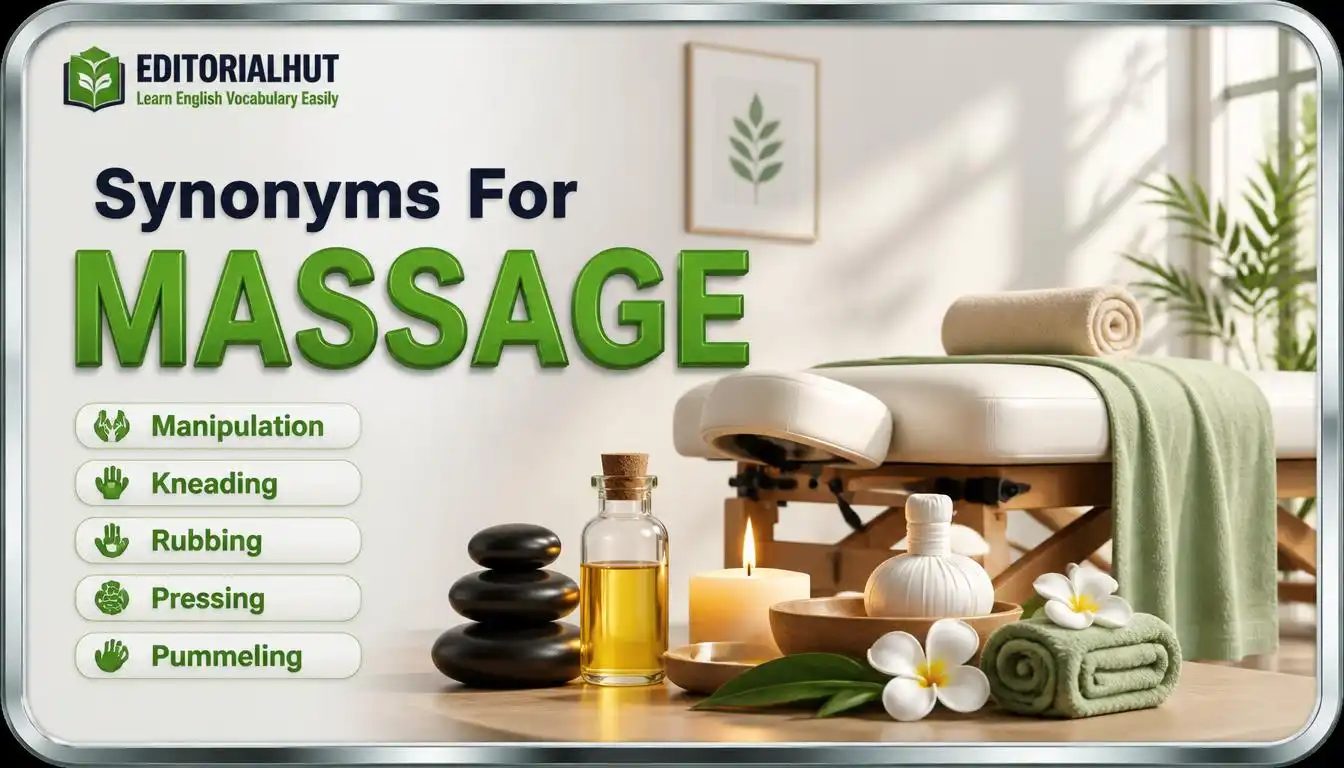
Looking for the right synonyms for massage? The best choice depends on what you mean and how you use the word. Massage can describe a relaxing treatment, a therapeutic technique, or the simple action of rubbing or kneading the body. Words such as rub, knead, stroke, press, bodywork, and therapy may work in different contexts, but they are not always interchangeable. In this guide, you’ll discover useful synonyms for massage, their meanings, connotations, examples, word forms, and natural usage.
1. What Does the Synonyms for Massage really Mean
Massage generally means the act of rubbing, pressing, kneading, or manipulating parts of the body with the hands or other techniques to promote relaxation, comfort, or physical well-being.
It can also be used figuratively.
Example:
She booked a massage to relax after a long week.
As a verb:
The therapist massaged his shoulders.
2. Synonym
A synonym is a word with the same or a closely related meaning.
Depending on context, possible synonyms for massage include:
- Rub — move the hand over something with pressure
- Knead — press and work muscles or tissue
- Manipulate — work or move something using the hands
- Stroke — gently move the hand over a surface
- Press — apply pressure
- Treatment — an activity intended to improve a condition
- Bodywork — hands-on techniques involving the body
- Therapy — treatment intended to improve physical or mental well-being
These aren’t perfect replacements in every sentence. Rub may be appropriate for a simple action, while bodywork or therapy can refer to a broader professional practice.
3. Denotative Meaning
Denotative meaning is the literal, dictionary meaning of a word.
The denotative meaning of massage is:
The rubbing, pressing, or kneading of the body, usually for relaxation, comfort, or therapeutic purposes.
For example:
He received a massage for his sore muscles.
Here, massage refers literally to a physical treatment involving manipulation of the body.
4. Connotative Meaning
Connotative meaning refers to the feelings, associations, or ideas a word can suggest beyond its literal definition.
Massage commonly has positive or neutral associations such as:
- Relaxation
- Comfort
- Wellness
- Self-care
- Relief
- Recovery
- Professional treatment
- Physical well-being
For example:
I need a relaxing massage.
The word can suggest rest, comfort, and stress relief, rather than simply the physical act of rubbing.
Its connotation can change depending on the surrounding words and context.
5. Part of Speech
Massage can function mainly as a noun and a verb.
Noun
She scheduled a massage.
Here, massage names the treatment or activity.
Verb
The therapist massaged her back.
Here, massage describes the action.
6. Syllables
Massage has two syllables:
mas-sage
The stress falls on the second syllable:
mas-SAGE
7. Pronunciation
American English
/məˈsɑːʒ/
British English
/ˈmæsɑːʒ/
It is approximately pronounced:
muh-SAHZH in American English.
The final sound is similar to the sound in the middle of “mirage.”
8. Etymology
Massage entered English through French, from massage.
The French term is associated with the practice of rubbing or kneading the body. Its deeper linguistic history is commonly connected with words meaning to touch, handle, or knead.
9. Word Formation
Massage is a basic lexical word in modern English.
It can produce several related forms:
- massage
- massaged
- massaging
- massager
- massages
Examples:
She massaged her shoulders.
He is massaging the muscles gently.
The massager uses vibration to relax the muscles.
10. Affixation
Affixation means creating words by adding prefixes or suffixes.
The base word massage can form related words through English grammatical endings:.
.massage + -ed → massaged
A massage + -ing → massaging
massage + -er → massager
The suffix -er can indicate a person or device that performs an action.
Thus, massager can refer to a person or a device used for massage, depending on context.
11. Semantic Meaning
The central semantic idea of massage is:
Physical manipulation of the body through rubbing, pressing, kneading, or similar movements.
However, the exact meaning can vary.
Massage as relaxation
She had a massage after her vacation.
Massage as therapeutic bodywork
The therapist used massage to work on tight muscles.
Massage as a verb
He massaged his neck after sitting at the computer.
Figurative use
Massage can sometimes mean to carefully alter or manipulate something, especially information.
The report was massaged to make the results look better.
Here, massaged does not mean physical rubbing. It means modified or presented in a particular way, often with a slightly negative implication.
What Are the Best Synonyms for Massage?
The best synonyms for massage include rubdown, bodywork, kneading, rub, and massotherapy. Other useful options are deep-tissue therapy, Swedish massage, and body rub. Each word carries a slightly different feeling, so choose one that matches your tone, whether casual, medical, or professional.
Massage Synonyms at a Glance
| Synonym | Simple Meaning | Best Used For |
| Rubdown | A quick, informal massage | Casual conversation |
| Bodywork | General term for hands-on muscle treatment | Wellness and spa writing |
| Kneading | Pressing and squeezing muscles like dough | Describing technique |
| Rub | A short, simple massage | Everyday speech |
| Manipulation | Skilled movement of muscles or joints | Medical or clinical writing |
| Massotherapy | Professional term for massage treatment | Formal or medical writing |
| Shiatsu | A Japanese finger-pressure massage | Naming a specific style |
| Reflexology | Foot pressure-point therapy | Naming a related practice |
| Deep-tissue therapy | A firm massage for deep muscle layers | Describing a massage type |
| Swedish massage | A gentle, relaxing massage style | Naming a specific style |
| Sports massage | A massage for athletes | Fitness writing |
| Hot stone massage | A massage using heated stones | Spa menus |
| Relaxation therapy | Treatment focused on calming the body | Wellness writing |
| Body rub | A casual term for a massage | Informal speech |
| Hands-on therapy | Any treatment done with the hands | General description |
(Note: This table lists 15 of the most commonly searched synonyms. All are explained in full below.)
1. Rubdown
Meaning: A rubdown is a quick, informal massage, often given after exercise.
Examples:
- The coach gave the runner a quick rubdown after the race.
- My dad likes a shoulder rubdown after mowing the lawn.
2. Bodywork
Meaning: Bodywork is a general term for any hands-on treatment that works on the muscles and body.
Examples:
- She offers several types of bodywork at her wellness studio.
- Bodywork can help release tension built up from sitting all day.
3. Kneading
Meaning: Kneading means pressing and squeezing muscles in a rolling motion, similar to shaping dough.
Examples:
- The therapist began kneading the tight muscles in his back.
- Kneading the shoulders can help loosen stiff knots.
4. Rub
Meaning: A rub is a simple, casual word for a short massage.
Examples:
- Can you give my feet a quick rub? They’re sore.
- He asked for a back rub after his long shift.
5. Manipulation
Meaning: Manipulation refers to the skilled movement or adjustment of muscles and joints by hand.
Examples:
- The physical therapist used gentle manipulation to ease his stiff neck.
- Manipulation of the shoulder joint reduced her pain over time.
6. Massotherapy
Meaning: Massotherapy is a formal, professional term for massage used as a form of therapy.
Examples:
- Massotherapy is often recommended for chronic muscle pain.
- She studied massotherapy for two years before opening her clinic.
7. Shiatsu
Meaning: Shiatsu is a Japanese massage style that uses finger pressure on specific points of the body.
Examples:
- He tried shiatsu for the first time and loved the firm pressure.
- Shiatsu focuses on pressure points rather than long strokes.
Note: Shiatsu is a specific style of massage, not a general synonym, so use it when naming that exact technique.
8. Reflexology
Meaning: Reflexology is a therapy that applies pressure to points on the feet, hands, or ears believed to connect to other body parts.
Examples:
- Reflexology sessions usually focus only on the feet.
- She said the reflexology treatment helped her feel more relaxed.
Note: Reflexology is a related practice, not a direct synonym, since it targets pressure points rather than full-body muscles.
9. Acupressure
Meaning: Acupressure is a technique that uses finger pressure on specific points of the body to relieve tension.
Examples:
- Acupressure on the temples can help ease a headache.
- The therapist used acupressure instead of deep muscle work.
Note: Acupressure is a related therapy, closely connected to massage but distinct in method.
10. Deep-Tissue Therapy
Meaning: Deep-tissue therapy is a firm type of massage that targets deeper layers of muscle.
Examples:
- Deep-tissue therapy helped release the knots in his lower back.
- She prefers deep-tissue therapy over a light, gentle rub.
11. Swedish Massage
Meaning: Swedish massage is a gentle, flowing massage style meant for relaxation.
Examples:
- A Swedish massage is a great choice for first-time clients.
- The spa’s most popular service is the Swedish massage.
12. Effleurage
Meaning: Effleurage is a light, gliding stroking technique used at the start or end of a massage.
Examples:
- The therapist began with effleurage to warm up the muscles.
- Effleurage strokes are slow, smooth, and calming.
Note: Effleurage is a specific technique within massage, not a stand-alone synonym.
13. Petrissage
Meaning: Petrissage is a kneading and lifting technique used to work deeper into the muscle tissue.
Examples:
- Petrissage helps break down tight muscle knots.
- The therapist switched to petrissage after the warm-up strokes.
Note: Like effleurage, petrissage names a technique used during a massage rather than the massage itself.
14. Percussion Massage
Meaning: Percussion massage uses quick tapping or striking movements to loosen muscles.
Examples:
- The therapist used percussion massage on his tight calves.
- Percussion massage tools have become popular for home use.
15. Sports Massage
Meaning: Sports massage is a massage designed to help athletes prevent injury and recover faster.
Examples:
- The team’s sports massage therapist works before every game.
- She booked a sports massage after finishing the marathon.
16. Chair Massage
Meaning: Chair massage is a short massage given while the client sits in a special chair, usually focused on the back, neck, and shoulders.
Examples:
- The office offered a free chair massage during wellness week.
- A ten-minute chair massage can ease a stressful afternoon.
17. Hot Stone Massage
Meaning: Hot stone massage uses heated stones placed on or rubbed over the body to relax muscles.
Examples:
- Hot stone massage is especially popular in the winter months.
- The warm stones made the massage feel even more soothing.
18. Thai Massage
Meaning: Thai massage is a style that combines stretching and pressure, often performed on a mat rather than a table.
Examples:
- Thai massage includes gentle pulling and stretching movements.
- He felt more flexible after his first Thai massage.
19. Myotherapy
Meaning: Myotherapy is a treatment that focuses specifically on muscle pain and tension.
Examples:
- Myotherapy targets the exact muscle causing the pain.
- Her doctor recommended myotherapy for chronic shoulder tightness.
20. Physiotherapy
Meaning: Physiotherapy is a broader medical treatment that helps the body move and heal, sometimes including massage techniques.
Examples:
- His physiotherapy sessions included stretching and muscle work.
- Physiotherapy helped her recover faster after the injury.
Note: Physiotherapy is a related medical field, not a direct synonym, since it covers much more than massage alone.
21. Chiropractic Manipulation
Meaning: Chiropractic manipulation involves adjusting the spine and joints, often done alongside massage-like techniques.
Examples:
- The chiropractor used manipulation to realign his back.
- Chiropractic manipulation is different from a typical muscle massage.
Note: This is a related field, not a true synonym, since it focuses on joints and the spine rather than muscles alone.
22. Relaxation Therapy
Meaning: Relaxation therapy is any treatment, including massage, aimed at calming the body and mind.
Examples:
- Relaxation therapy helped lower her stress levels before the exam.
- The spa’s relaxation therapy package includes a full-body massage.
23. Spa Treatment
Meaning: Spa treatment is a broad term for services offered at a spa, including massage.
Examples:
- She booked a spa treatment for her birthday weekend.
- The hotel’s spa treatment menu includes massages and facials.
Note: Spa treatment is a broader category, since it can also include facials, baths, and other services besides massage.
24. Therapeutic Touch
Meaning: Therapeutic touch refers to any healing method that uses the hands to ease pain or stress.
Examples:
- Therapeutic touch can calm patients before a medical procedure.
- Nurses sometimes use therapeutic touch alongside standard care.
25. Body Rub
Meaning: Body rub is a casual way to describe a full-body massage.
Examples:
- He treated himself to a body rub after the long flight.
- A body rub at the end of the day can ease tension.
26. Stroking
Meaning: Stroking means moving the hands smoothly and gently over the skin or muscles.
Examples:
- The therapist finished the session with slow stroking.
- Gentle stroking can help a baby fall asleep.
27. Pummeling
Meaning: Pummeling describes a firm, repeated striking or pressing motion used in some massage styles.
Examples:
- The masseuse’s pummeling technique loosened his tight shoulders.
- Some sports massages include brief pummeling to boost circulation.
28. Working the Muscles
Meaning: Working the muscles is an informal phrase for massaging or manipulating sore muscles.
Examples:
- The trainer spent ten minutes working the muscles in his calves.
- She likes working the muscles in her feet after standing all day.
29. Muscle Therapy
Meaning: Muscle therapy is a general term for treatments, including massage, that target muscle pain and tightness.
Examples:
- Muscle therapy helped him recover faster after the injury.
- The clinic offers muscle therapy for both athletes and office workers.
30. Hands-On Therapy
Meaning: Hands-on therapy is any treatment performed directly with the hands, including massage.
Examples:
- Hands-on therapy gave her more relief than medication alone.
- The clinic specializes in hands-on therapy for back pain.
How to Choose the Right Synonym for Massage
Synonyms do not always mean exactly the same thing. Some words are formal, and some are casual. Some sound gentle, while others sound firm or intense.
- Formal vs. informal: “Massotherapy” fits a medical report, while “rub” fits a casual chat.
- Positive vs. negative meanings: Most massage synonyms are positive, but a word like “pummeling” can sound rough if used incorrectly.
- Strong vs. weak meanings: “Deep-tissue therapy” sounds intense, while “stroking” sounds light and gentle.
- Academic writing: Use precise terms like “manipulation” or “myotherapy.”
- Business writing: Use professional terms like “bodywork” or “spa treatment.”
- Casual conversation: Use simple words like “rub” or “rubdown.”
- Creative writing: Use descriptive words like “stroking” or “kneading” to add detail.
- Social media content: Use short, friendly words like “body rub” or “chair massage.”
Choosing the right word helps your writing feel natural instead of forced.
Formal and Informal Synonyms for Massage
| Formal Synonym | Informal Synonym | Example Context |
| Massotherapy | Rub | Medical report vs. casual chat |
| Manipulation | Rubdown | Clinical note vs. gym talk |
| Bodywork | Body rub | Wellness brochure vs. text message |
| Deep-tissue therapy | Muscle work | Spa menu vs. everyday speech |
| Hands-on therapy | Working the muscles | Clinic website vs. casual comment |
Best Synonyms for Different Contexts
Academic Writing
- Manipulation
- Massotherapy
- Myotherapy
- Physiotherapy
Blog Writing
- Bodywork
- Deep-tissue therapy
- Relaxation therapy
- Hot stone massage
Business Writing
- Spa treatment
- Bodywork
- Massotherapy
- Sports massage
Everyday Conversation
- Rub
- Rubdown
- Body rub
- Chair massage
Creative Writing
- Kneading
- Stroking
- Pummeling
- Hands-on therapy
Common Mistakes When Using Synonyms
- Choosing a word with the wrong meaning. Using “acupressure” when you mean a full-body rub can confuse readers, since it is a specific technique.
- Using a formal word in casual speech. Saying “I need massotherapy” to a friend sounds stiff instead of natural.
- Replacing a word without checking context. “Chiropractic manipulation” is not the same as a relaxing spa massage.
- Using a synonym that changes the tone. “Pummeling” can sound too aggressive for a gentle, relaxing description.
- Repeating synonyms too much in SEO content. Overusing fancy words like “myotherapy” in every sentence can make writing feel unnatural and hard to read.
Synonyms vs. Related Words
- True synonyms share almost the same meaning. “Rub” and “rubdown” are close true synonyms for a simple massage.
- Near-synonyms are similar but carry a different feeling or intensity, like “deep-tissue therapy” versus “gentle stroking.”
- Related words connect to the topic but describe something slightly different, like “reflexology” or “acupressure,” which focus on pressure points rather than full muscles.
- Contextual alternatives only work in certain situations, such as “spa treatment,” which can mean much more than just a massage.
Understanding these differences helps you pick words that stay accurate.
How to Use Synonyms in Your Writing
Synonyms can make your writing feel more natural and varied.
- Essays: Swap “massage” for “manipulation” or “bodywork” in academic explanations.
- Blog posts: Use “deep-tissue therapy” or “relaxation therapy” to describe services in detail.
- Emails: Use simple words like “rub” or “rubdown” when writing casually to a friend.
- Website content: Use professional terms like “massotherapy” or “hands-on therapy” for a polished tone.
- Social media posts: Keep it short and friendly with words like “body rub” or “chair massage.”
- Stories: Add sensory detail with words like “kneading” or “stroking.”
- School assignments: Use clear, accurate terms depending on the subject, such as science or health class.
Frequently Asked Questions About Synonyms for Massage
What is another word for massage?
Common alternatives include rubdown, bodywork, kneading, and rub. These words can replace “massage” in casual or general writing.
What is the best synonym for massage?
The best synonym depends on context. “Bodywork” works well for general wellness writing, while “rub” fits casual conversation best.
Which synonym is best for formal writing?
“Massotherapy” and “manipulation” are strong choices for formal, medical, or academic writing about massage.
Which synonym is best for everyday conversation?
“Rub” and “rubdown” sound natural and simple in everyday conversation with friends or family.
Can I use these synonyms in academic writing?
Yes, but choose precise terms like “manipulation,” “myotherapy,” or “physiotherapy” instead of casual words like “rub.”
Are all synonyms exactly the same?
No. Many words listed are near-synonyms or related terms, like “reflexology” or “acupressure,” which describe specific techniques rather than a general massage.
How can I learn synonyms easily?
Read example sentences, group words by formality, and practice using each word in your own writing until it feels natural.
How can synonyms improve my writing?
Synonyms add variety, prevent repetition, and help your writing feel more precise and engaging for readers.
Conclusion
Learning synonyms for massage can make your writing, blogging, and everyday speech more interesting and clear. Instead of repeating the same word, you now have 30 useful options for different situations, from casual chats to formal reports.
Try using words like “bodywork,” “rubdown,” or “massotherapy” in your next email, essay, or blog post. Practice a little each day, and these words will soon feel like a natural part of your vocabulary. Keep writing, keep learning, and enjoy discovering new words along the way!

Shahid Imran is an English language and vocabulary specialist at EditorialHut.com, focusing on synonyms, word meanings, alternative words, and practical example sentences. He helps readers discover better words, expand their vocabulary, and communicate more clearly and confidently.